This Is Music Tuition. Not a Loud Rehearsal. Here's the Difference.
Music Gym is a school. Our job is to teach. And teaching music properly requires focus, listening, and sound at the right level. Not the loudest possible level.
There's a growing trend of music schools marketing soundproofed studios as a premium feature. Here's what soundproofing actually does: it stops noise escaping to the neighbours. That's it. It says nothing about what happens inside the room, and it does absolutely nothing to protect the student sitting in it.
We think parents should know the difference.
What the science says about young ears
The World Health Organisation recommends children are not exposed to sound levels above 75 decibels over extended periods. That's a lower threshold than for adults, and for good reason. Children's ear canals are smaller, which creates greater sound pressure, and damage builds up gradually and painlessly. By the time it shows up it's often already permanent.
For context, an acoustic drum kit averages 119 decibels. As loud as a chainsaw. At that level, damage can begin in under 15 minutes. A child in a soundproofed room with an acoustic kit and no volume control isn't in a premium environment. They're in a potentially harmful one.
But it goes beyond the ears. Research published in Frontiers in Psychology found that children are significantly more susceptible to sound-induced distraction than adults, because their attentional control is still developing. Studies consistently show that excessive noise causes mental fatigue, disrupts concentration and impairs verbal memory in children. These effects are even more pronounced in kids with attention or language difficulties. A loud, uncontrolled lesson isn't just a risk to young ears. It's a barrier to learning.
How we do things at Music Gym
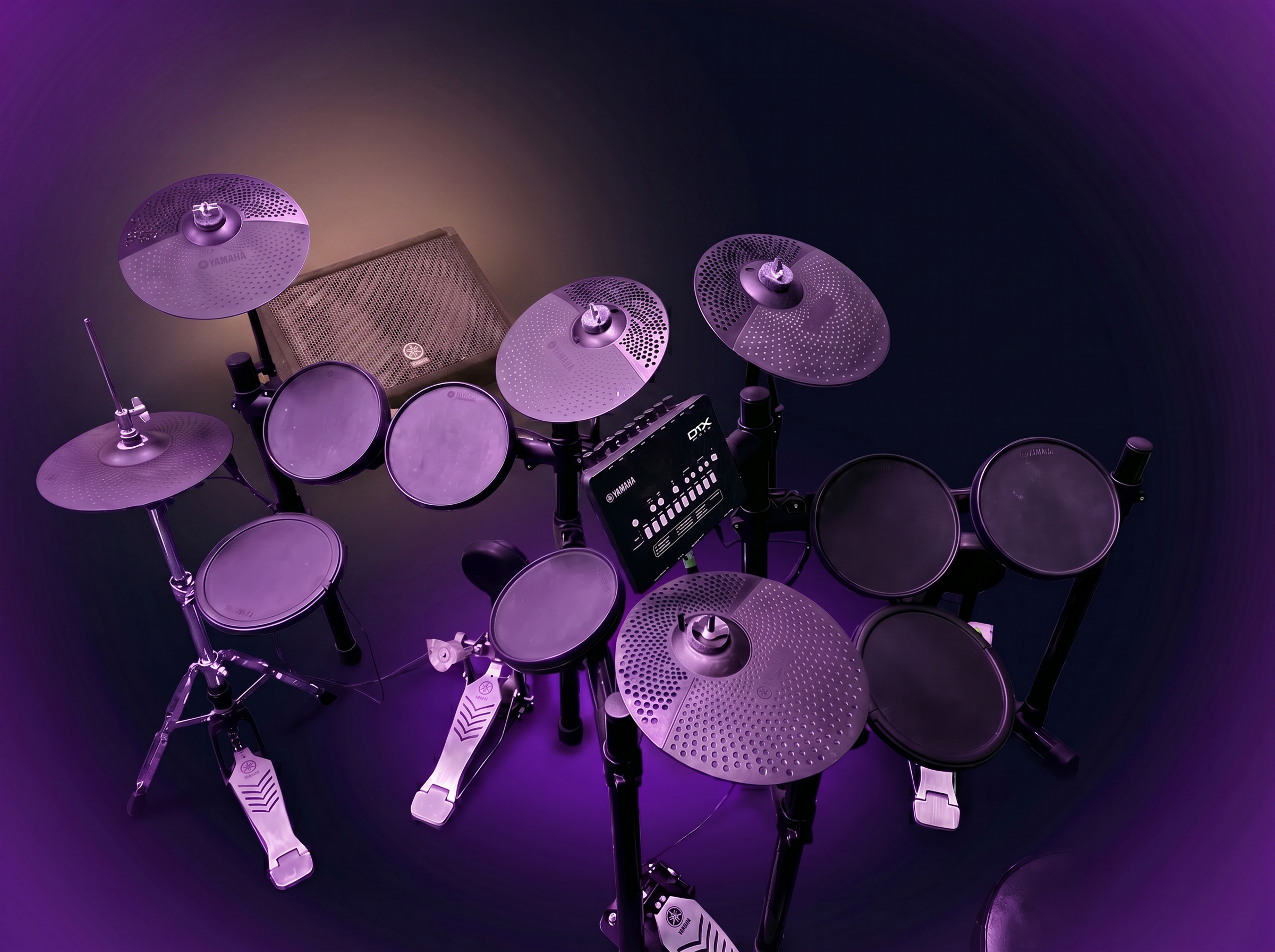
Guitar and drum lessons run through a Yamaha PA system operated by the teacher. The teacher sets the level. They control it throughout the lesson. If a student gets carried away and starts playing too hard, the teacher can bring the volume down or cut it off completely in a second. The student doesn't decide how loud the lesson is. The teacher does.
Keyboard students play on Yamaha instruments at teaching volumes. We have a PA in the room too. But keyboard lessons at Music Gym don't come close to damaging levels because they're not meant to. Students are learning fingering, technique, timing and musicality. Not performing at the O2.
The first rule every Music Gym student learns
When the teacher speaks, you stop playing. No noise, no strumming, no tapping. The instrument is silent until you're told otherwise.
This isn't just a classroom rule. It's a musical one. The best musicians in the world know when not to play. Learning to listen, respond and control your instrument is fundamental to becoming a real musician, and it's something we teach from the very first lesson.
The PA system supports this. The teacher can silence the room instantly. The lesson flows because the teacher is in control of the environment, including the sound.
The bottom line
Soundproofed studios protect the neighbours from the noise. Teacher-controlled sound levels protect your child's ears and set them up to learn without fatigue.
At Music Gym we've been running structured, safe, teacher-led lessons since 2011. Yamaha-equipped, focused, and built around one thing: turning students into musicians. That's not changing.
Further reading: WHO guidelines on safe listening: who.int Frontiers in Psychology, noise effects on children's cognitive performance: frontiersin.org American Tinnitus Association: ata.org
E&OE — Information correct at time of publication. Music Gym makes every effort to ensure accuracy but cannot guarantee that all details remain current. Always verify important information directly with the relevant organisation. View our full disclaimer.